5 Reasons You Wake Up Exhausted
If your mornings start with a blaring alarm, a racing heart, and twenty minutes of doomscrolling you never chose — it's not a willpower problem. It's a wake-up problem. Here's what's actually happening, and how to fix it.
See the fix ↓You're not bad at mornings. Your alarm is.
For years you've told yourself you're "just not a morning person." But here's the thing nobody told you: humans woke up fine for thousands of years — with light, gradually. Then we replaced the sunrise with a 90-decibel siren six inches from our heads, and started wondering why mornings feel like an ambush. The five reasons below explain why your mornings feel broken. None of them are about you.
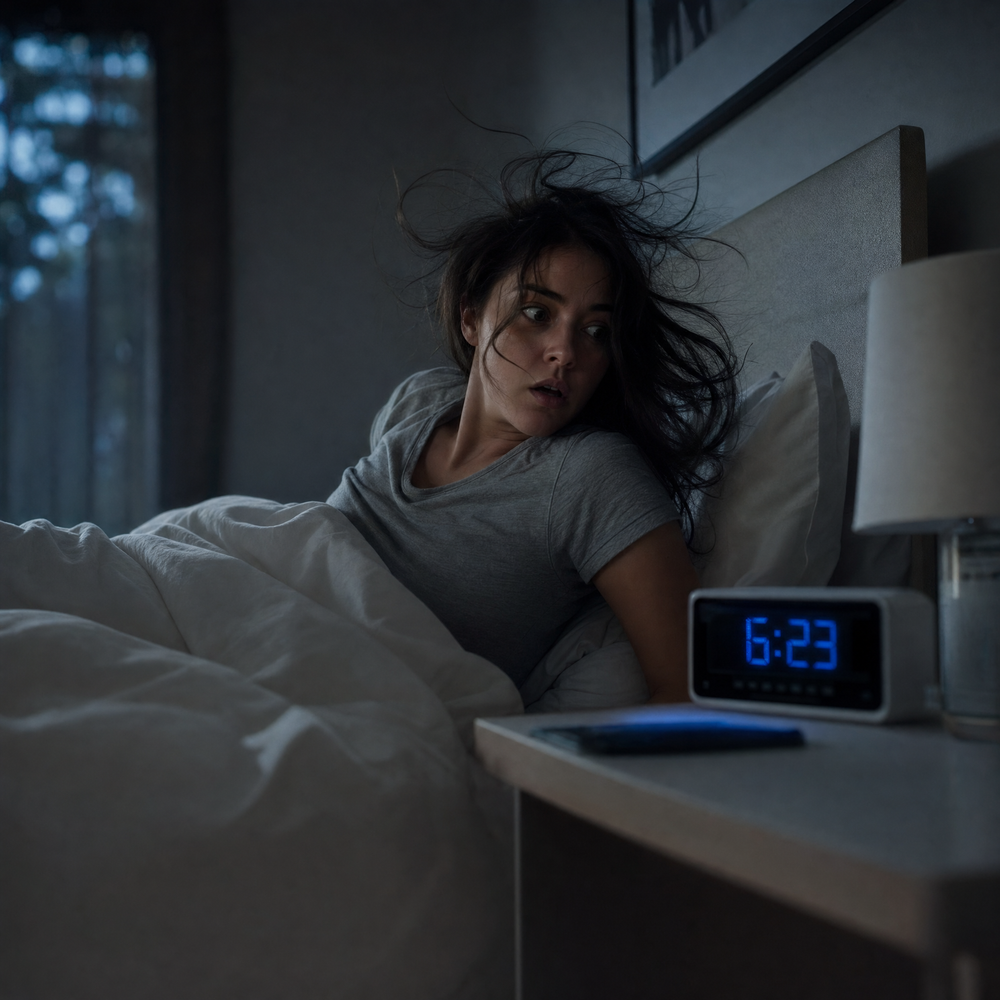
You're not being woken up. You're being startled awake.
A loud alarm doesn't ease you out of sleep — it triggers your body's startle response. Heart pounding, muscles tense, wide-eyed in half a second. You're starting every single day in emergency mode.
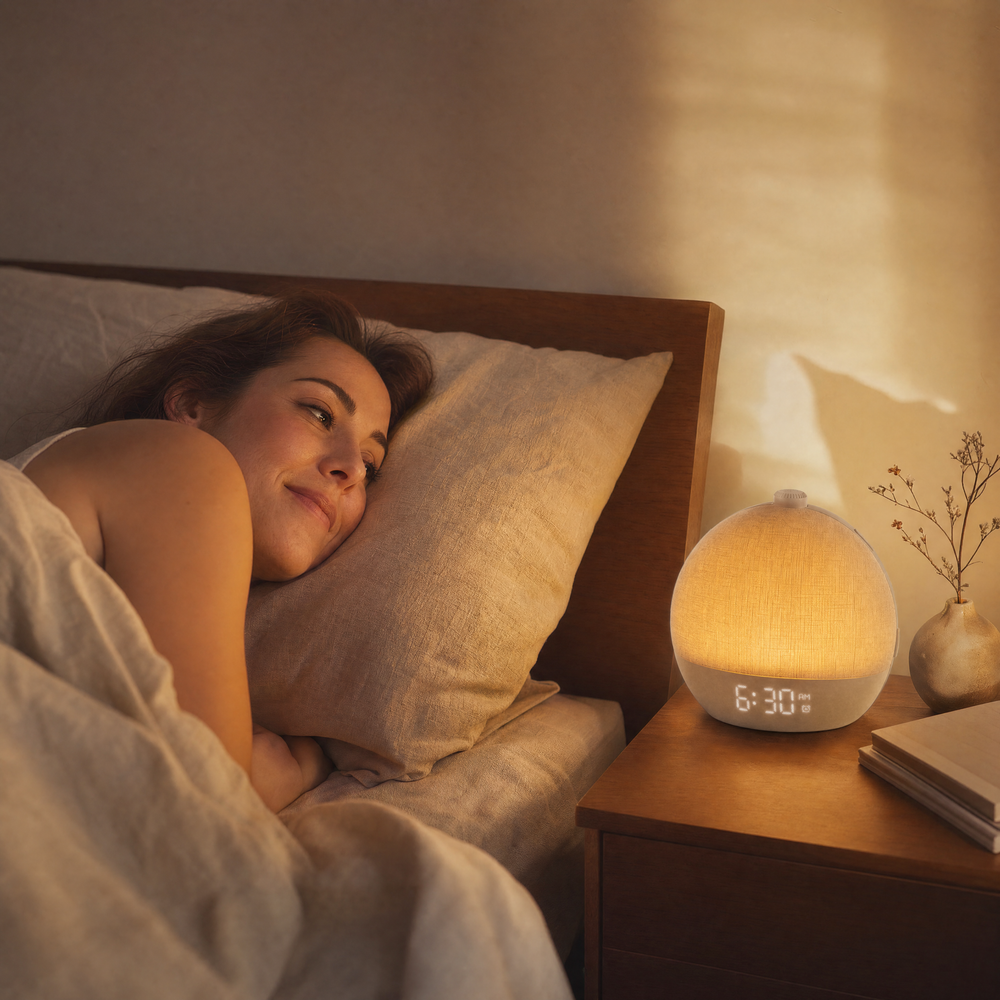
Waky Dawn works the other way. Thirty minutes before your wake time, it begins to glow — softly at first, then building like a real sunrise. Your body does what it was designed to do with morning light: it surfaces from sleep gradually, on its own. By the time the gentle backup sound plays, most mornings you're already awake. No jolt. No siren. No emergency.
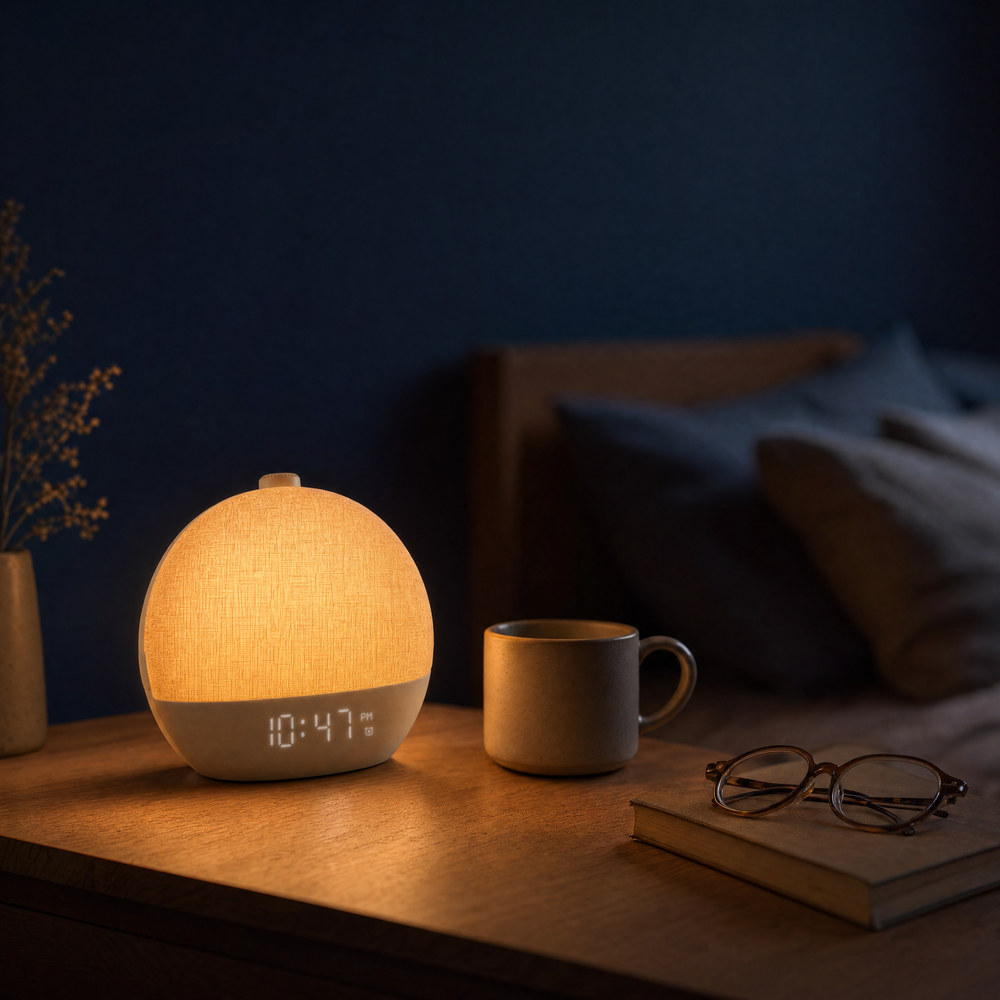
Your phone owns the first 30 minutes of your day.
Be honest: your alarm rings, you reach for your phone to snooze it, and suddenly you're reading headlines, checking messages, scrolling someone else's morning. You haven't even sat up yet, and the world already has your attention.
The only reliable way out isn't discipline — it's removing the phone from the bedroom entirely. Waky Dawn takes its job. It wakes you, tells the time, and asks for nothing back. No screen to grab. No feed to fall into. Your first thirty minutes belong to you again.
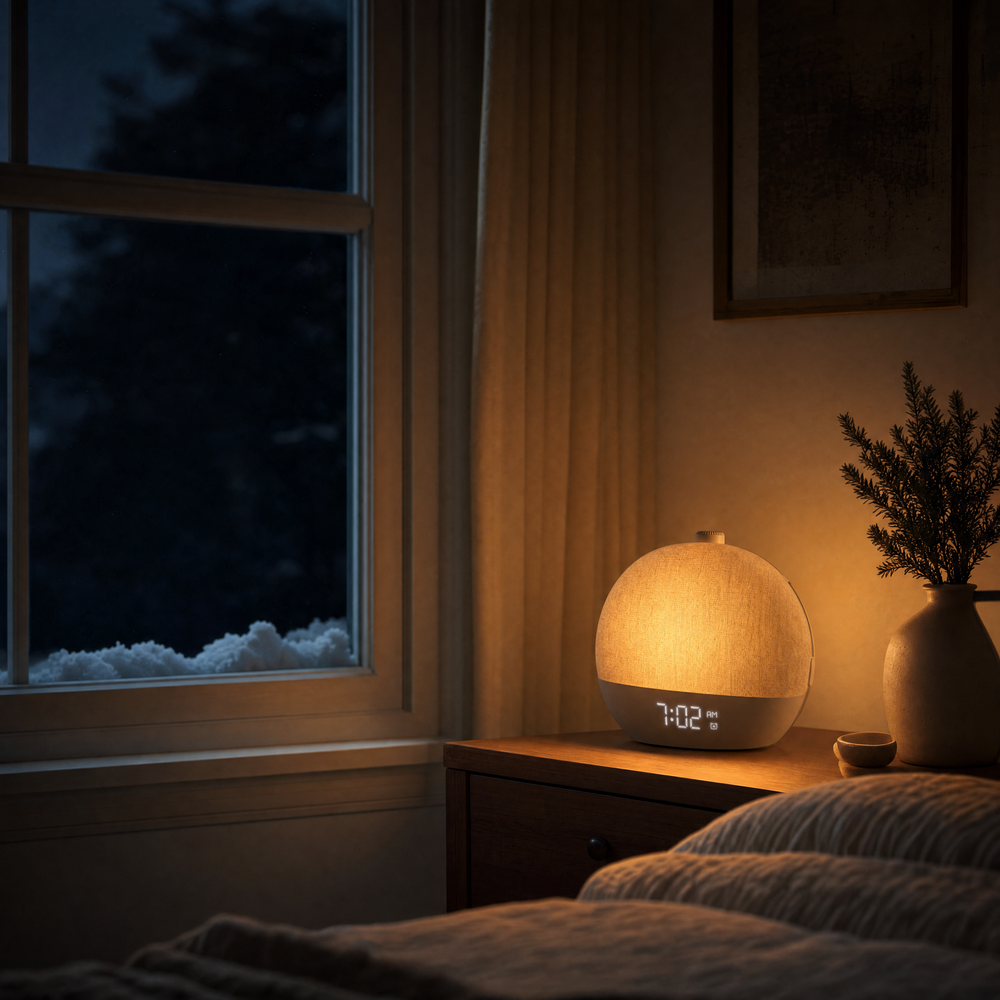
You live in Canada. The sun doesn't show up for work until 8 AM.
From October to March, most Canadians wake up in total darkness. Your body clock runs on light — and for six months a year, it's getting none when it matters most. No wonder winter mornings feel twice as heavy.
Waky Dawn brings the sunrise indoors. Same gradual light, every morning, whether it's June or January. When it's pitch black outside at 7 AM, your bedroom still gets a dawn.
You've been relying on willpower. Willpower loses.
You've tried going to bed earlier. Putting the phone across the room. The 5 AM club, the apps, the podcasts. They all worked — for about four days. Because they all depend on you making the right choice at the worst possible moment: half-asleep, in the dark.
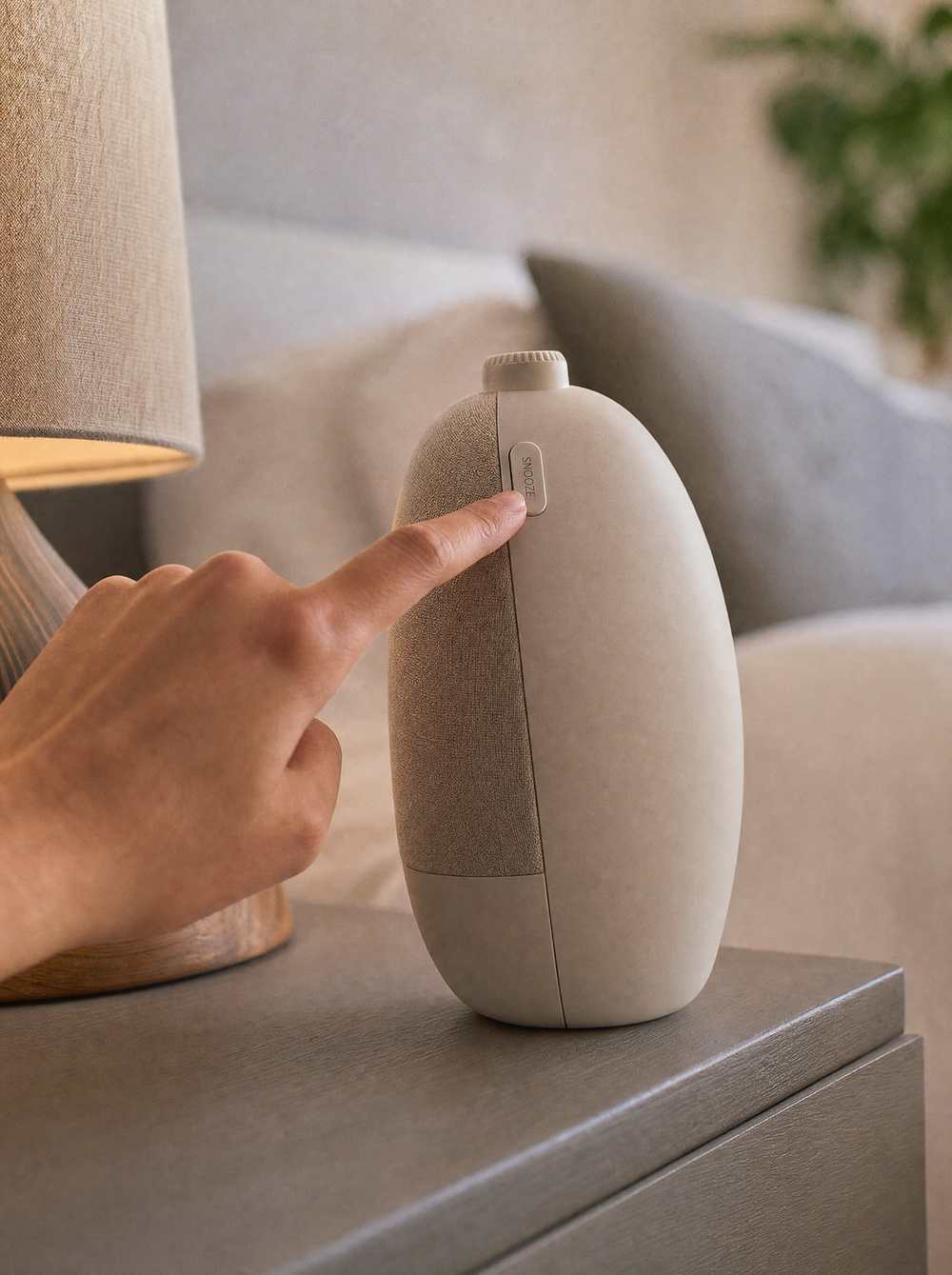
Waky isn't another habit to maintain. It's a one-time change to your environment. Plug it in once, set your time, and the light does its job every single morning — even when your willpower is still asleep. That's why it works when everything else didn't: it doesn't need you to be strong. It just needs a power outlet.
The "premium" alternatives lock you into apps and subscriptions.
Look closely at the big-name sleep clocks. One requires a mandatory app and pushes a monthly subscription to unlock what you already paid for — its reviews are full of customers who feel trapped. Another advertises "no subscriptions"... then sells you one on the next scroll.
Waky Dawn has no app. No account. No subscription. Not as a promotion — as a principle. You buy it once, it's yours, and every feature works forever. Actually no app. Actually no subscription. Ever.
| Waky Dawn | Brand H. | Brand L. | |
|---|---|---|---|
| Price | $119, once | $170–230 | $170+ |
| Mandatory app | None | Required | Optional |
| Subscription | Never | Pushed monthly | Upsold |
| Ships from Canada | Yes | No | No |
This isn't a wellness trend. It's 30 years of sleep science.
Dawn simulation — light that builds gradually before waking — has been studied in sleep medicine since the late 1980s. In one controlled study, people woken with gradual dawn light reported higher alertness and showed faster reaction times than those woken by a standard alarm. Another study found that just 20 minutes of gradual morning light was linked to improved cognitive performance hours after waking. Your body already knows how to wake up with light. Waky Dawn just gives it the light back.
Meet Waky Dawn
The phone-free sunrise alarm. 30 minutes of gradual light, a gentle backup sound, a sunset wind-down mode for the evening — and nothing to download, ever.
Waky Dawn — $119 CAD
Or step up to The Better Mornings Bundle — Waky Dawn plus premium earplugs and two morning guides — all for the same $119 (a $202 value).
Honest answers to fair questions
Will it actually wake me up?
For most people, yes — and more gently than anything you've used. The light wakes you gradually, and a soft backup sound plays at your set time, so you're always covered. Honesty matters to us: if you currently sleep through multiple blaring alarms, keep the backup sound on and give your body a week or two to adjust. The light does the heavy lifting; the sound is your safety net.
What if it bothers my partner?
Gradual light is far less disruptive than a blaring alarm — most partners sleep right through it, and many end up preferring it. For very different schedules, that's exactly what Waky Hush is for: a silent vibration on your wrist that wakes only you.
Why $119 when my phone is free?
Your phone isn't free. It costs you the startle, the snooze spiral, and the first half hour of your day. And compared to the big-name clocks at $170–230 plus a monthly subscription? Waky Dawn is $119, once, forever. The math isn't close.
Not ready yet? Take 10% with you.
Join the list and get 10% off your Waky Dawn when you're ready — plus the science of better mornings. No spam, unsubscribe anytime.