School mornings are coming. You're the alarm again.
6:45 AM. You call up the stairs. You call again. By the third time you're using the voice you promised yourself you'd never use, and the day hasn't started yet. It isn't a discipline problem and it isn't your parenting. It's a wake-up problem with a fix older than the alarm clock.
See what it's costing you ↓Your child isn't bad at mornings. Their alarm is.
Ask any parent how their child sleeps and they won't tell you about the night they'll tell you what the morning was like. In one survey, the most common reason parents gave for believing their child sleeps well was simply that they wake up in a good mood. For thousands of years, children woke with light, gradually. Then, in a single generation, we swapped the sunrise for a siren six inches from their heads and started calling them difficult. None of it is their fault. None of it is yours. All of it is fixable.
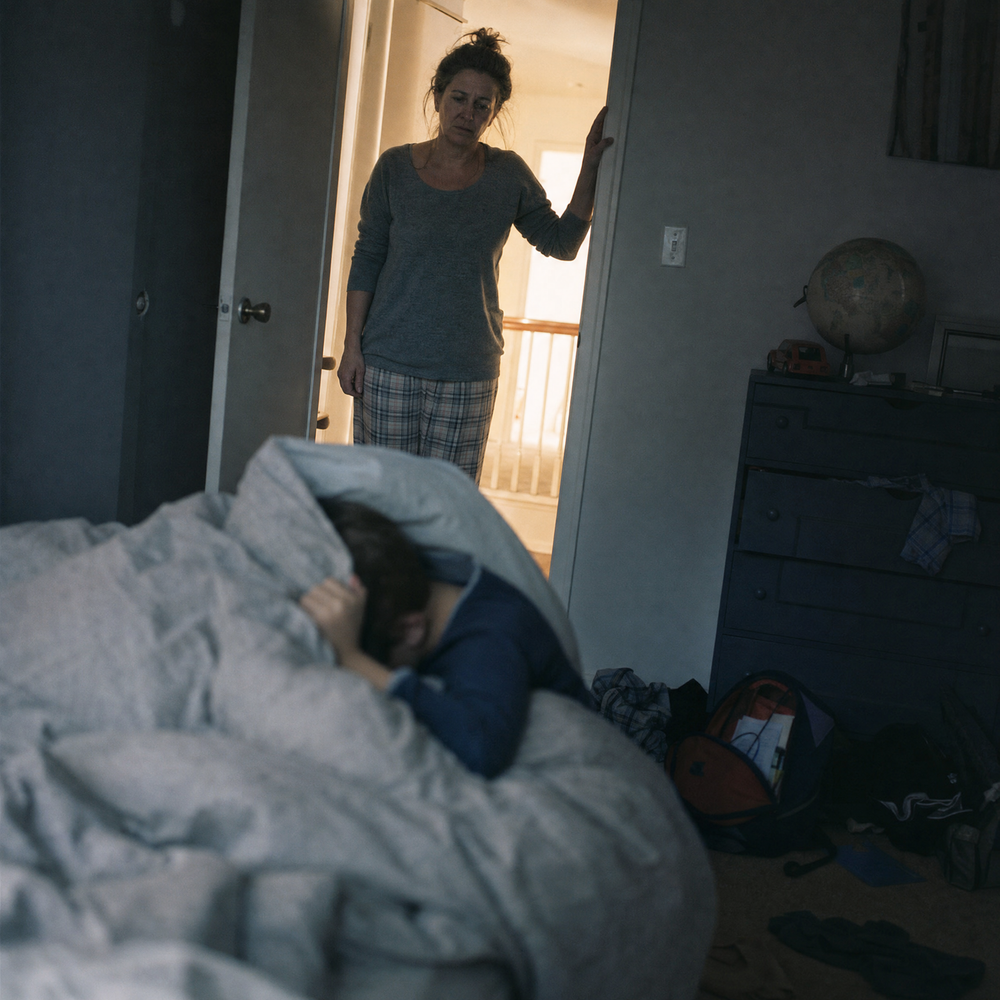
You are the alarm. And it costs you the calmest hour of your day.
Lights on. Second call. Third call, in the voice you promised yourself you'd never use. Then the socks, the bag, and a child in the car who still isn't really awake.
Children sleep deeper than adults. Pulled out of that by sound, they land in sleep inertia the fog that makes a seven-year-old furious about cereal. It isn't defiance, and it isn't your parenting.
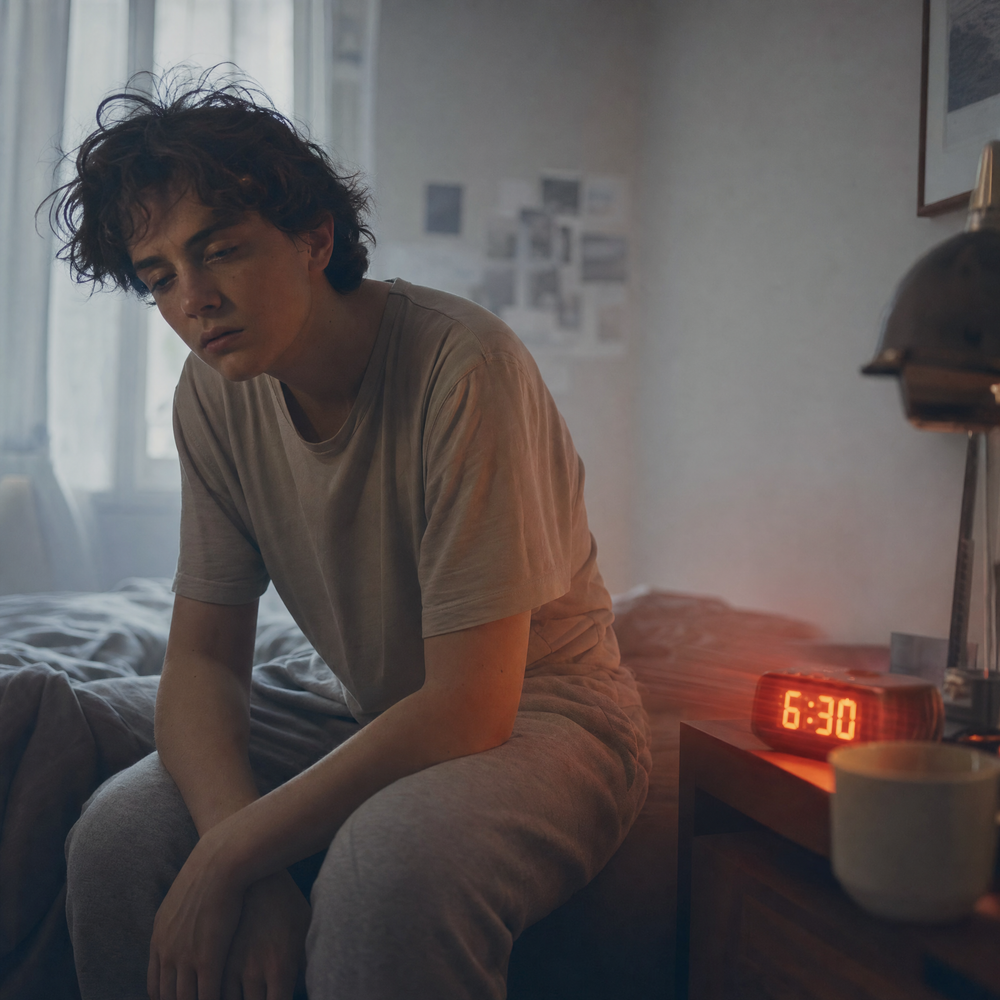
You've already tried the things that were supposed to fix this.
An earlier bedtime. A sticker chart that worked for nine days. A second alarm across the room. Taking the tablet away at seven.
Every one of them asks a tired child for willpower at the exact hour they have none and asks you to enforce it at the hour you have none either. That's why they fade.
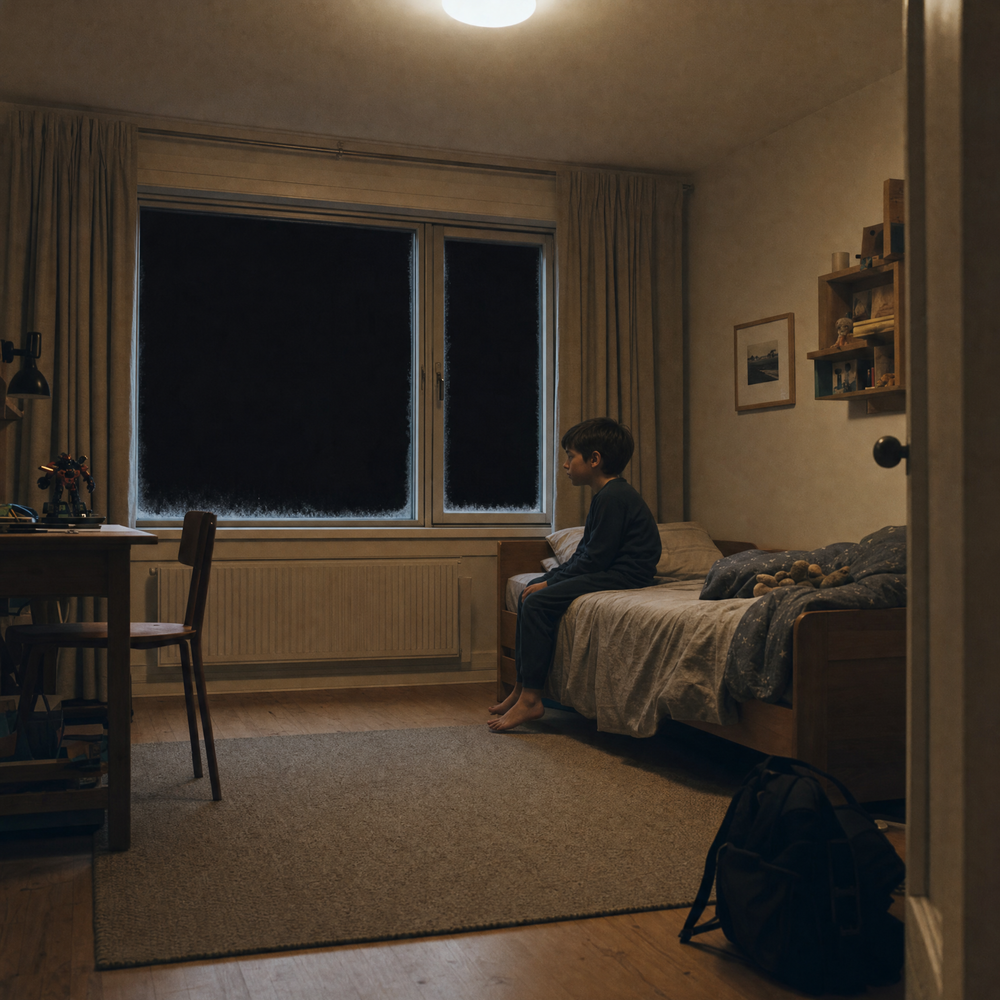
From September to March, they wake up in the dark.
School starts before the Canadian sun does for most of the year. A child's body clock runs on light and all winter it gets none at the one moment it needs it.
It isn't them. It's a missing sunrise.
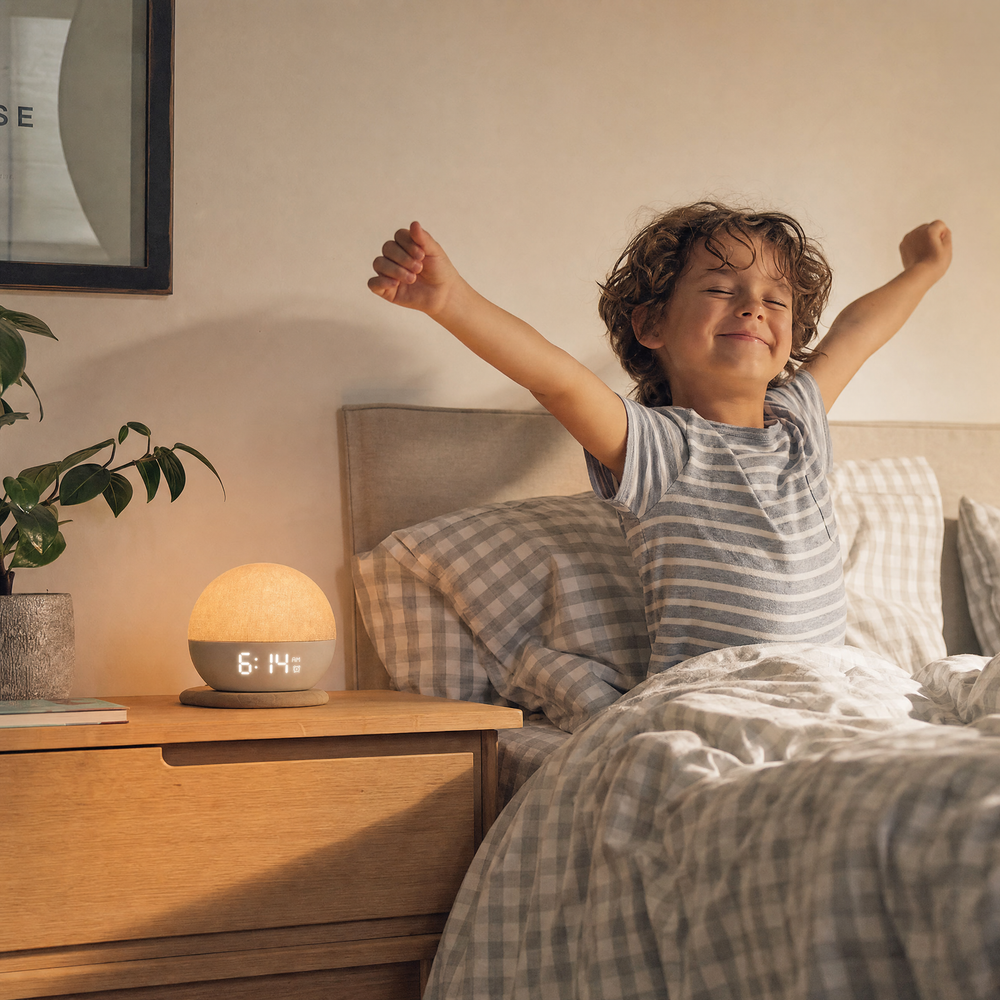
Three things happen while they're still asleep.
Thirty minutes before the alarm, a faint amber glow starts barely brighter than a candle. Too dim to wake them, bright enough for the body to register.
The light rises, slowly, the way the horizon does. Their body reads it as morning and begins waking itself, before any sound.
The sound arrives last, at the time you set. By then most children are already surfacing.
You set it once. Nothing to enforce, nothing to remember, no app. That's why it works when the sticker chart didn't.

The part that shows up at school.
When researchers ran dawn light on children, the children felt more alert on waking, got up more easily, and reported higher alertness during their second class of the day. Evening types the ones who fight you hardest at seven benefited most.
That's what the research shows. It does not say a regular alarm harms your child, and we're not going to tell you it does. It says light before sound produces a measurably easier wake-up.
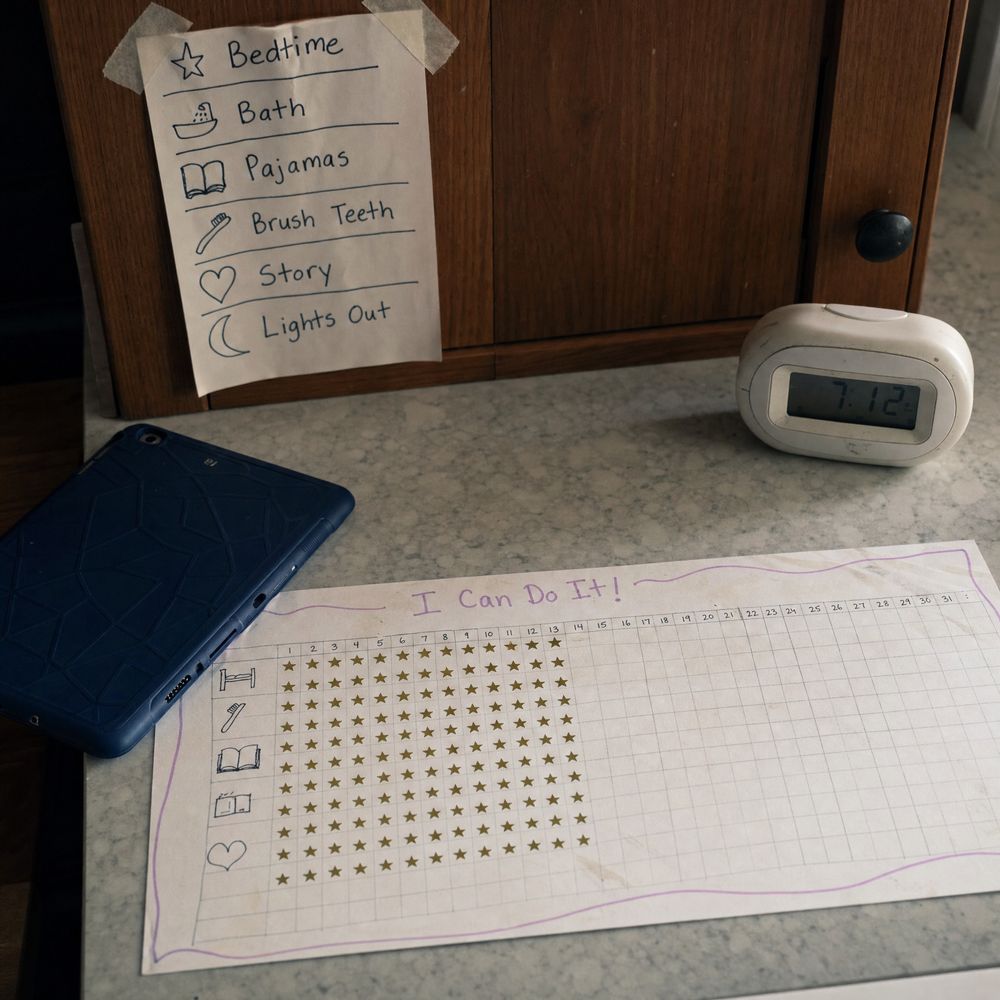
What the first two weeks usually look like.
Nights 1–3. Nothing obvious. Most parents wonder here whether they wasted their money.
Nights 4–10. The first morning you open the door and they're already awake. Then it's most days.
After that, the alarm becomes a backup instead of the event. That's what parents report not a promise. Which is why the trial runs thirty nights, not seven.
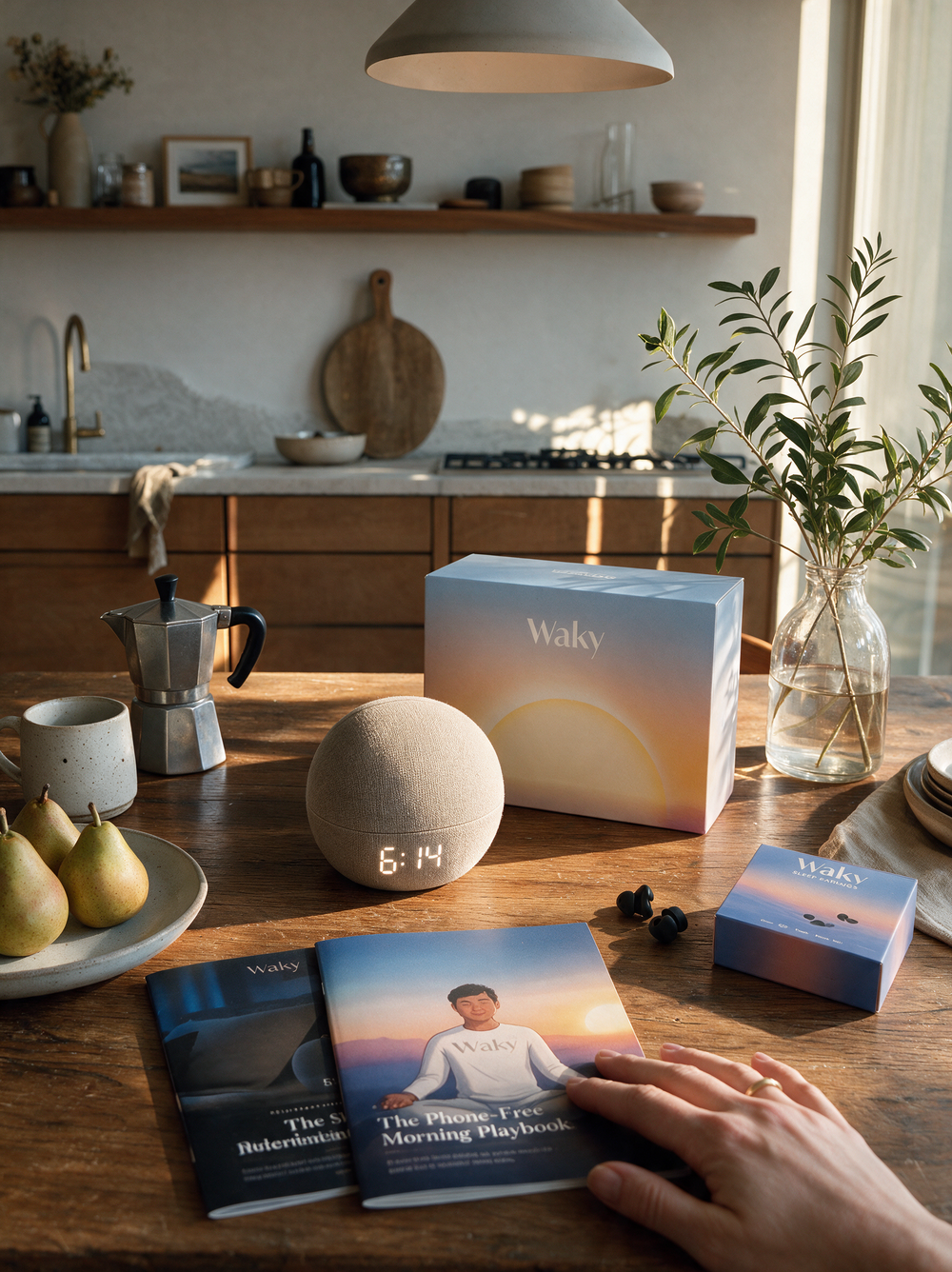
Small enough to hold. Nothing on it to scroll.
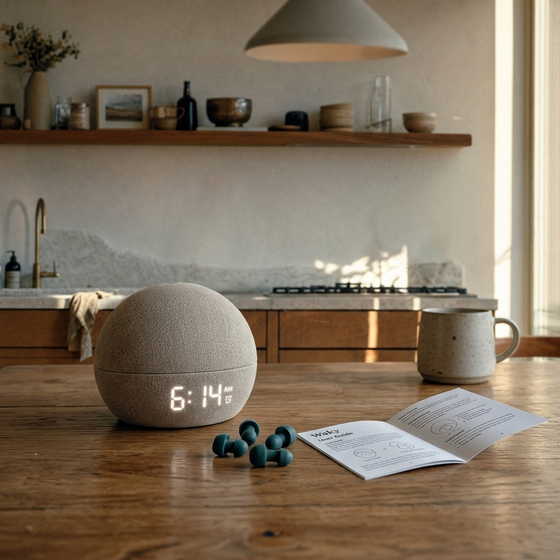
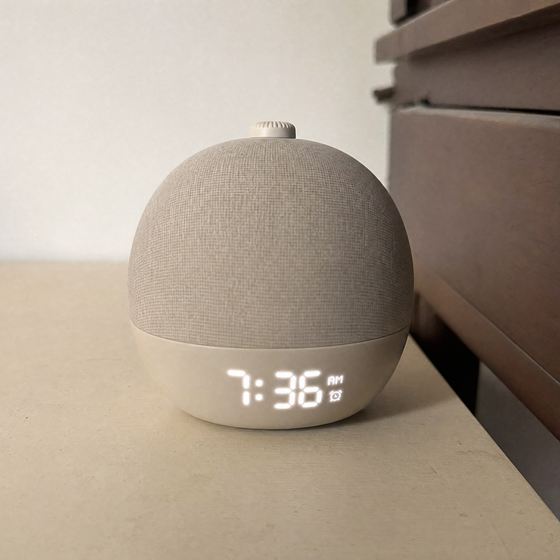
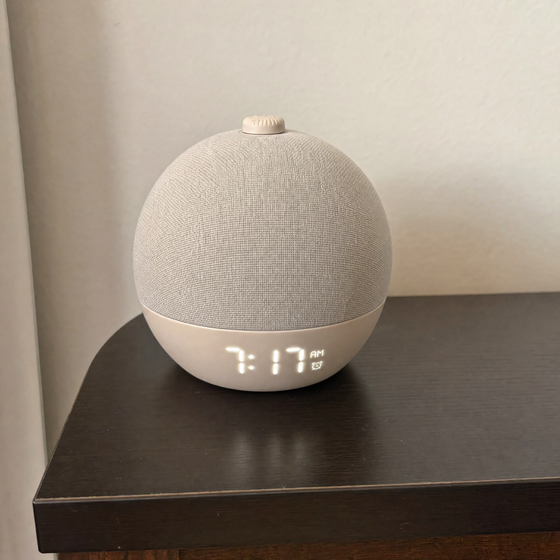
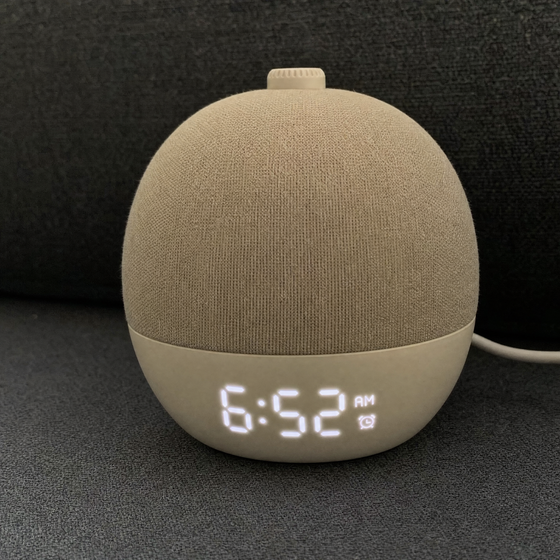
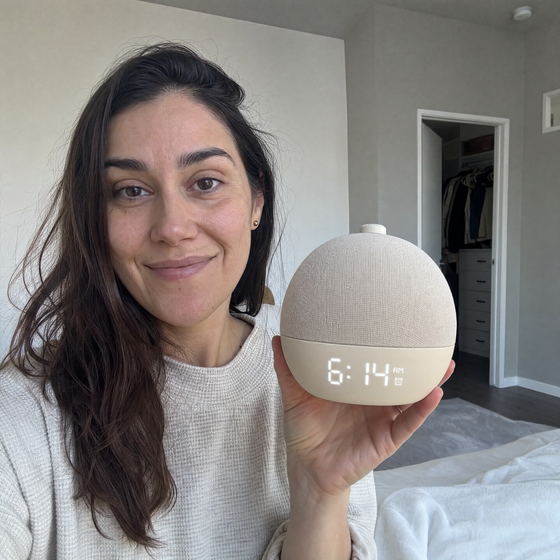
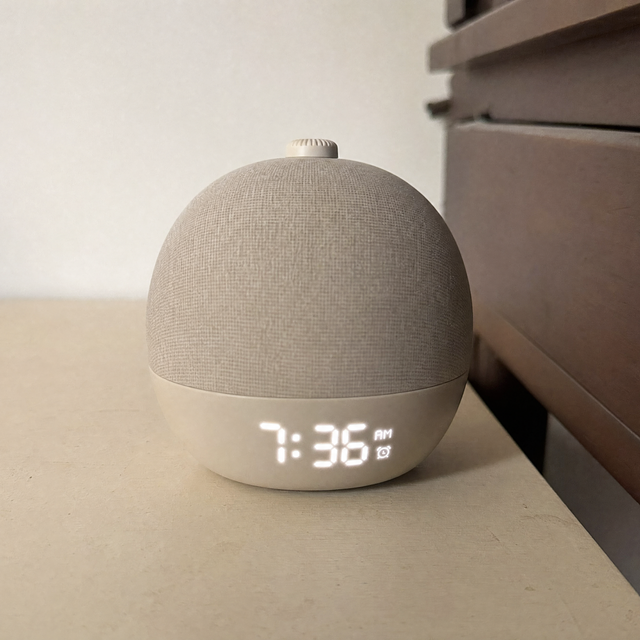
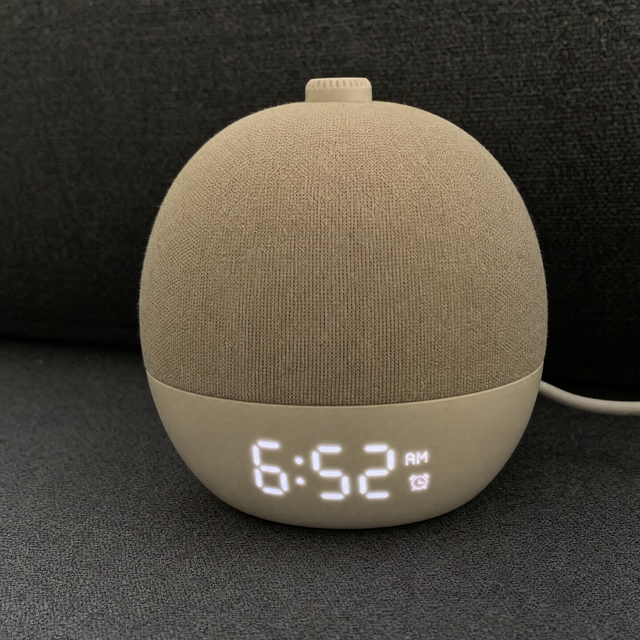
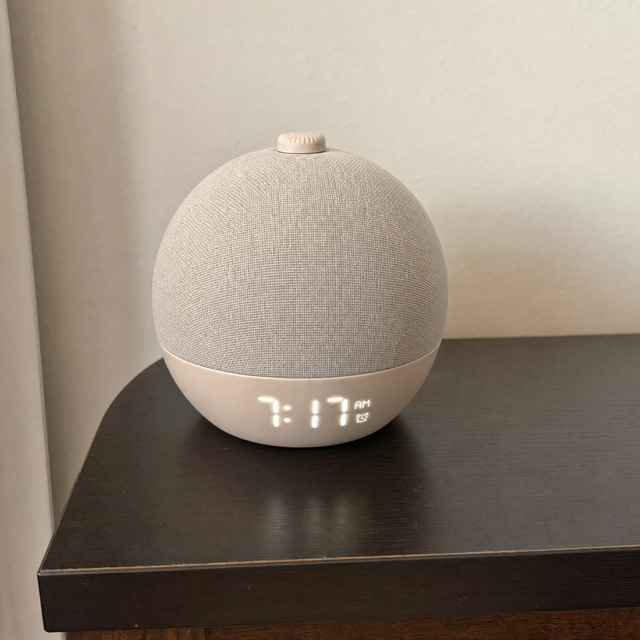
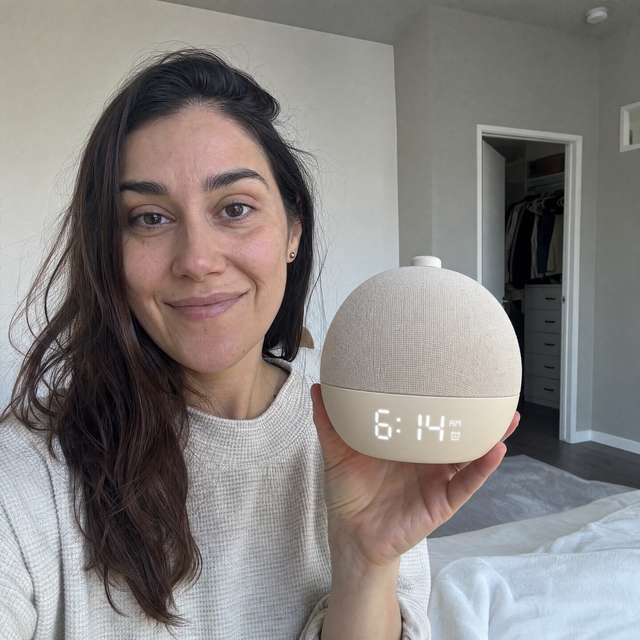
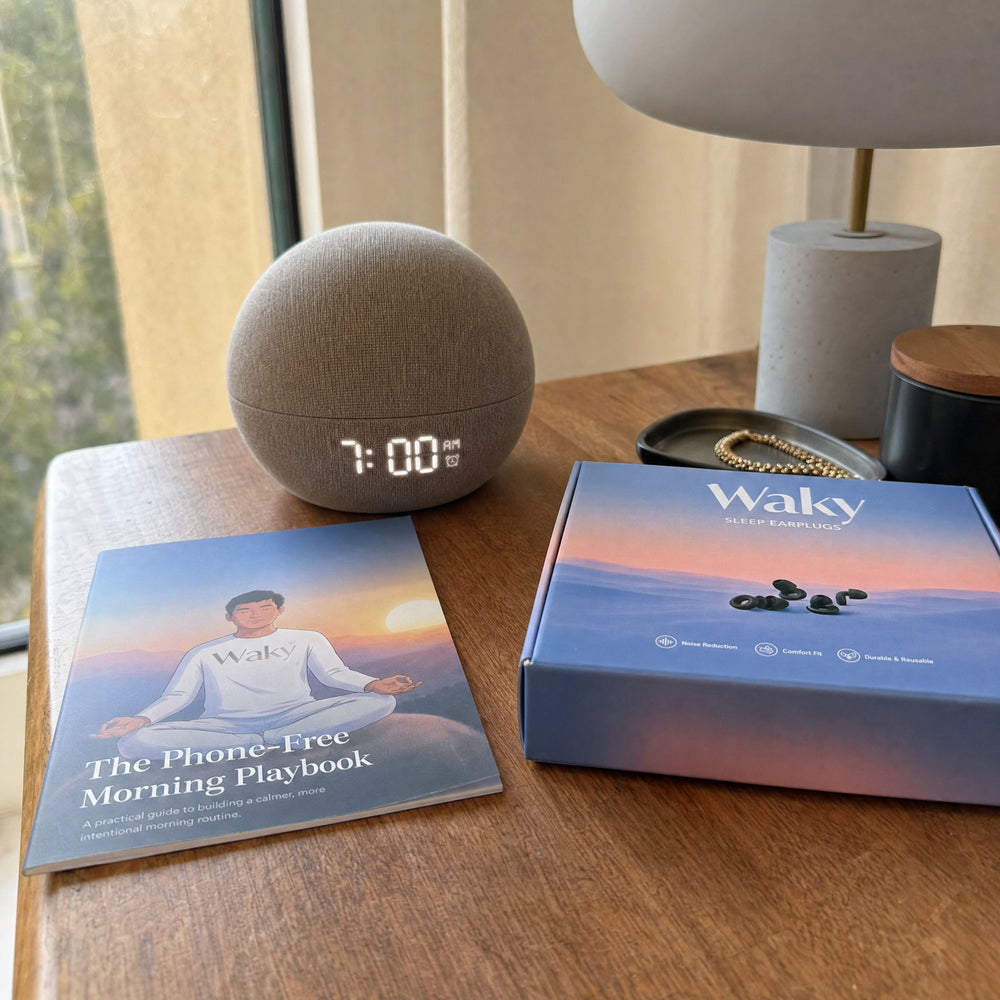
Eight centimetres across, wrapped in woven fabric. The time glows softly through the weave no screen, no apps, no blue light on a child's nightstand.
Plug it in, set the wake time, done. No app, no account, and nothing your child can change by accident.
Thirty school mornings. Then decide.
Not thirty days from the order thirty nights of actually using it. If mornings are the same at the end, email us and we refund the full $149. No form, no photos, no explanation.
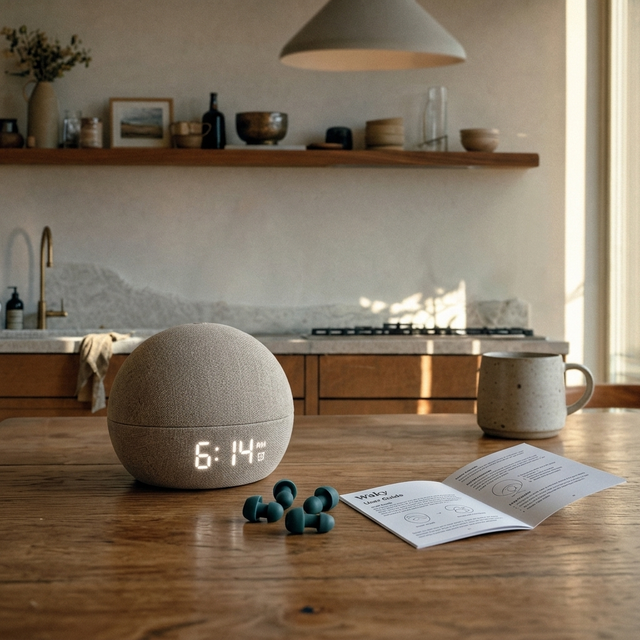
You keep the Waky Hush. You keep the earplugs. You keep both printed guides. Yours either way. There's only one way to find out if this works in your house, and it isn't reading this page.
Not a parenting hack. Forty years of sleep science, ignored by your alarm clock.
That groggy first hour has a name — sleep inertia — and gradual light is one of the most-studied ways to soften it. When light rises before the alarm, the brain begins waking on its own. The figures come from peer-reviewed human studies, not from us.
Meet Waky Dawn
The phone-free sunrise alarm. 30 minutes of gradual light, a gentle backup sound, a sunset wind-down mode — and nothing to download, ever.
Waky Dawn — $149 CAD
Every order now ships with the Waky Hush silent alarm ($69), free premium earplugs and two printed morning guides — and they're yours to keep even if you return the clock.
Honest answers to fair questions
Will it actually wake my child up?
For most children, yes — the light eases them awake over 30 minutes, and a soft backup sound plays at the time you set, so nobody misses the bus. And if your child genuinely sleeps through anything, the Waky Hush included in your order is a silent wrist vibration built for exactly that.
Is a regular alarm bad for my child?
Probably not, and the research doesn't say it is. The largest study on that question, covering 509 people, found no difference between waking naturally and waking to an alarm. What the research does support is the other side: light before sound produces a measurably easier wake-up.
We share a room. Will it wake the sibling too?
Gradual light is far less disruptive than a blaring alarm — most siblings sleep straight through. And for two children on genuinely different schedules, the Waky Hush in your order wakes one of them silently, on the wrist, without touching the room.
My child is seven. Will they break it or fiddle with it?
It's a fabric ball with one flush button and no screen — nothing to browse, no removable parts, and it sits low enough not to tip. You set the wake time; a child can't change it by pressing something. Two-year warranty if it fails in normal use.
Why $149 for a kid's alarm clock?
Because it isn't really an alarm clock — it's the thing that ends the morning fight, every school day for years. The big-name clocks run $170–230 plus a monthly subscription for one device. You're getting two alarms, the earplugs and both guides for $149, once. No app. No subscription. Ever.
How long does delivery take, and what if I need help?
Free tracked shipping, usually around ten days, with tracking the moment it ships. For setup, a fault or a refund, email hello@waky-online.com — we're small enough that it's the same person every time.